Saturday, 15 December 2012
The End
Having heard back from the medical schools I applied to, I shall now concentrate my efforts on studying for my A-levels. I shall hopefully be studying medicine at St. George's University of London from next year. Thanks to everyone for following and I hope you enjoyed my blog!

Thursday, 29 November 2012
Polio Vaccine checks
The Independent Monitoring Board of the Global Polio Eradication Initiative has recommended that all children travelling abroad from Nigeria, Pakistan and Afghanistan be required to show evidence of being vaccinated against polio, as polio remains an endemic in these three countries. 99.9% of polio had been eradicated globally yet the target of full global eradication of polio by the end of the year shall clearly not be achieved. There are calls for more parents to demand that their children be vaccinated against polio, a viral disease marked by inflammation of nerve cells of the brain and spinal cord, as it shall pressurize governments in these countries to offer it more. However, suggestions of not allowing children from these countries to travel abroad without proof of vaccination have been frowned upon in some corners, since although all 50 states in the USA offer the vaccine, there are some possible exemptions to being vaccinated - with an opt out scheme for religious and philosophical reasons - yet there are no restrictions on their travel. The injectable vaccine itself is thought to be very safe, as it only uses the inactive form of the virus. However, there have been cases, albeit extremely rare cases, of vaccine derived polio virus from the live oral polio vaccine, with 34 cases reported this year.Polio is extremely unpleasant and leads to paralysis, breathing problems and even death
Friday, 26 October 2012
Painkillers may cause suffering
The National Institute of Health and Clinical Excellence has issued new guidelines on headaches caused by medication overuse, which is thought to be a big problem in the United Kingdom. Although proper research papers on this topic are scarce, a German study (Katsarava, Current Neurology and Neuroscience Reports 2009, 9: 115-119) reports that up to 4% of the population could be affected by medication overuse. The NICE guidelines suggest 1 in 50. It is unclear why exactly medication overuse causes headaches but it is thought to have something to do with an imbalance in the body's pain control system.
The treatment for medication overuse pain is similar to the "cold turkey" method, whereby a patient who might be following a strict, long term painkiller course is forced to abruptly halt this for up to a month.
The treatment for medication overuse pain is similar to the "cold turkey" method, whereby a patient who might be following a strict, long term painkiller course is forced to abruptly halt this for up to a month.
Wednesday, 12 September 2012
Stem Cells as a Cure for Deafness
 A study published in the journal Nature today suggests that Stem Cell therapy could be used to improve hearing. The study was conducted on Gerbils, due to their similar hearing range, and after 10 weeks the group of 18 had regained on average 46% of their hearing, with a control group of 8 Gerbils not regaining any hearing without the therapy. The therapy involved administering a drug to the Gerbils which caused deafness by damaging the auditory nerves. Using human embryonic stem cells, they injected about 50,000 early stage auditory neurones into the cochlea. Although not resulting in an overall cure for deafness, the Gerbils went from not being able to hear busy traffic to being able to hear conversations - suggesting that it could result in a return to normality if tried on Humans. However, the ultimate aim would be to use these neurones, adding sensory hairs, alongside a cochlear implant. Although Human trials are still several years away, this breakthrough is encouraging news for the 10 million deaf people in the United Kingdom, 15% of whom could be cured by this exact procedure should it work in humans.
Tuesday, 11 September 2012
Hay Fever Vaccine
 Research conducted by Imperial College London and King's College London has suggested that a new Hay Fever vaccine could be developed as a cure for the sufferers. This is great news for those who do suffer from Hay Fever, the number of them exceeding 10 million in England alone, with the current vaccine only benefiting about 1,000 people. The main treatment is in the form of drugs including antihistamines and steroids, with injections of pollen under the skin being reserved for the serious cases due to the expensive nature of the treatment. The research team endeavoured to use shallowed injections in an area of the skin which is densely packed with white blood cells, allowing them to use a dose which is 1/2000th of the current injection. In the test group of 30 patients, it was suggested that the allergic reaction to grass pollen decreased because of the vaccine. A clinical trial with 90 patients is now commencing in order to find if the vaccine can combat symptoms other than grass allergy including sneezing. The relatively small dosage and the fact that fewer injections need to be administered per patient makes this method of treatment a lot more cost effective than previous attempts, and with Allergy UK describing this breakthrough as very encouraging, there is a strong possibility that within the next few years suffering from hay fever will be a thing of the past.
Wednesday, 5 September 2012
Use found for "junk" DNA
 Researchers have gained an understanding into the purpose of the long stretches of DNA, previously dismissed as "junk." Our understanding was that genes were the only important parts of the DNA molecule despite them only accounting for 2% of DNA. A new use has been discovered for another 80%. Within these regions, more than 10,000 new genes which code for how we control the genes that we know code for proteins and are thought to be Regulatory elements. One of the researchers, Professor Mike Snyder said "Much of the difference between people is due to the differences in the efficiency of these regulatory elements. There are more variants, we think, in the regulatory elements than in the genes themselves." The regulatory elements are thought to turn genes on or off and their discovery will provide an entirely new avenue for scientists to explore when seeking treatments for known conditions including Heart Disease and Diabetes. This is because genes are unable to function without regulatory elements, with malfunctioning of genes occurring when regulation fails, resulting in diseases including cancer and atherosclerosis. For now, 9% of DNA was found to be involved in the coding for regulatory switches although the true figure is thought to be closer to 20%.
Tuesday, 4 September 2012
Frozen IVF Embryos Debate
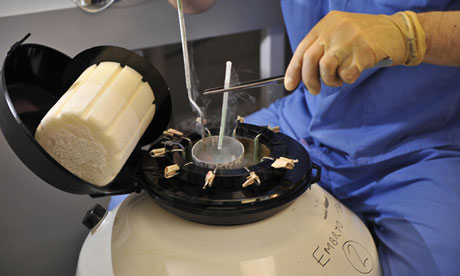
However, on the other hand, data from the Human Fertilisation and Embryology Authority shows that as of 2010, the success rate for frozen embryos was 23% compared to 33% for freshly implanted embryos.
It is unknown why such results are produced and they have been described as "counter-intuitive" by the lead researcher Dr. Abha Maheshwari. There are several theories which include one that states that the previously frozen embryos are given after the women's ovaries had settled down from the hormone treatment used to stimulate the ovaries so the hormone levels in the womb had returned to a more normal level and the embryos had been implanted into a more natural environment. Another idea is that only the high quality embryos are able to survive the whole process of being frozen although, with new developed methods, the survival rate tends to be more than 90%. The findings, although not acknowledged as experimentally sound by everyone, raise the question whether it would be wise to freeze all embryos before implanting them, a practice which is currently adopted in Japan. Their reviews say that previously frozen IVF embryos had 50% less of a chance of being born too small and 16% less risk of being preterm compared to fresh embryo babies The findings suggest that it would be safer for both the mother - suffering less bleeding - and the baby who would be less likely to have any complications. Although a long way off being confirmed and facing a lot of opposition, a debate in the near future once more experiments have been conducted is likely and there remains a possibility that the system currently run in IVF treatment might change in light of these findings.
Thursday, 16 August 2012
Work Experience: Chelsea & Westminster Hospital

Saturday, 4 August 2012
Dark Chocolate: The Guard Against Strokes

Wednesday, 18 July 2012
PHAB
Last month, I participated in a disability outreach course run by my school called PHAB. The whole thing lasted a week and on reflection, it was probably one of the most worthwhile things I have done. I spent was week with different people with a range of disabilities, getting to know them and looking after them. Over its course, I learnt a range of new skills including verbal and non-verbal communication.
I particularly enjoyed the visit to the theatre where I was with a guest who had really wanted to watch the musical Shrek for a long time. The excitement with which every act was received by the guests and their satisfaction at the end of it made the whole experience a pleasure. The guests also used some of the ideas in the musical in the film which we made together. Their ideas were great and the enthusiasm with which they approached the whole filming process was extremely enjoyable. The theme used was the Olympics and the ideas which were brought up were fascinating. The film was received as a massive success on the final day and all of the guests were glowing with delight at the prospect of being film stars themselves, which was a real pleasure to see.
I also had the opportunity to discuss the amazing palliative care system with some other guests and how it had progressed so much from when they were younger. As I have also been volunteering in my local hospice for over a year and have been able to see at first hand, I understood what they were saying. I found the experience very enlightening and was exposed to a whole load of new things and was pleased with how well I managed to adapt to each potential difficulty which arose, and by working with my school friends and the guests, managed to find solutions to make the experience run as smoothly as possible. Every single guest took as many opportunities as possible to convey their gratitude and I found this heart warming, as they were just grateful for our company. At the end of the week when they had to leave, the goodbyes were difficult but the experience was unforgettable - for anyone reading this considering whether or not to do such a thing, I would strongly recommend doing it as the experience is invaluable and the cause could not have been more worthwhile.
I particularly enjoyed the visit to the theatre where I was with a guest who had really wanted to watch the musical Shrek for a long time. The excitement with which every act was received by the guests and their satisfaction at the end of it made the whole experience a pleasure. The guests also used some of the ideas in the musical in the film which we made together. Their ideas were great and the enthusiasm with which they approached the whole filming process was extremely enjoyable. The theme used was the Olympics and the ideas which were brought up were fascinating. The film was received as a massive success on the final day and all of the guests were glowing with delight at the prospect of being film stars themselves, which was a real pleasure to see.
I also had the opportunity to discuss the amazing palliative care system with some other guests and how it had progressed so much from when they were younger. As I have also been volunteering in my local hospice for over a year and have been able to see at first hand, I understood what they were saying. I found the experience very enlightening and was exposed to a whole load of new things and was pleased with how well I managed to adapt to each potential difficulty which arose, and by working with my school friends and the guests, managed to find solutions to make the experience run as smoothly as possible. Every single guest took as many opportunities as possible to convey their gratitude and I found this heart warming, as they were just grateful for our company. At the end of the week when they had to leave, the goodbyes were difficult but the experience was unforgettable - for anyone reading this considering whether or not to do such a thing, I would strongly recommend doing it as the experience is invaluable and the cause could not have been more worthwhile.
TV Review: Horizon - The Truth About Exercise
I recently watched Horizon - The Truth About Exercise by Michael Mosley, which I had been told was very interesting and would change our outlook on exercise today. The aim set out in his introduction was to get healthier and not follow in the footsteps of his father who had type two diabetes. He revealed that a scan he had had on a previous horizon program had given him cause for concern and that despite wanting to get fitter and healthier, he simply had neither the conviction nor the time to do so. He showed this when he went to a running track and ran for 15 minutes, only to find out the he had barely burned off the calories he had from a quick snack of coffee and a muffin.

He first of all investigated an idea by James Levin, the doctor who invented "non-exercise activity thermogenesis" (Neat), arguing that the energy expended by running and jogging was negligible in comparison to the natural movements like fidgeting, bending and walking. Using three volunteers who wore the "fidget pants", he showed that there was a massive difference in results for people with different lifestyles. Unfortunately for Mosely, NEAT was a dead end for him, as his work involved sitting down for 12 hours each day and in contrast to some of the other volunteers, they found that the energy used up in his routine of natural movements was negligible.
The next port of call was a new idea called HIT (High Intensity Training) developed by researchers and scientists at the universities of Nottingham and Birmingham. This radical training regime proposed that three twenty second workouts three times per week can deliver exactly the same benefits as training in a gym for longer periods. Mosley underwent the exercise regime on a bike and didn't make any attempt to hide just how intensive and tiring the training was. Fortunately, it turns out that HIT was indeed a hit! Mosely had not only become fitter but also increased his insulin sensitivity. At the same time, the professor James Timmons revealed that Mosely had not increased his aerobic volume and explained that it was consistent with his prediction having screened Mosely's DNA. This was news to me - that a quick screening of someone's DNA can tell them just how much they could benefit from exercise!
As for the HIT regime, it is feasible that such a thing could work. Whenever I venture into the gym or do any sort of exercise for long periods, I tend to unconsciously eat more. Short bursts of exercise tend to kill off your appetite and result in breaking a sweat - the same outcome as longer sessions - only quicker. Timmons argued that the government guidelines of 150 minutes moderate and 75 minutes vigorous activity a week were "not personalised" and that people responded "very differently to the same exercises." Whether HIT will take over in the future and we shall all be screened to deduce what benefits we could get from exercise, eventually leading to personalised regimes remains to be seen. One message that was certainly hammered home by Mosely was that sitting in our chairs was the worst thing we could possibly do. Dieting was not the answer he claimed, as the body slows our metabolic rate and that exercise was the only answer.

He first of all investigated an idea by James Levin, the doctor who invented "non-exercise activity thermogenesis" (Neat), arguing that the energy expended by running and jogging was negligible in comparison to the natural movements like fidgeting, bending and walking. Using three volunteers who wore the "fidget pants", he showed that there was a massive difference in results for people with different lifestyles. Unfortunately for Mosely, NEAT was a dead end for him, as his work involved sitting down for 12 hours each day and in contrast to some of the other volunteers, they found that the energy used up in his routine of natural movements was negligible.
The next port of call was a new idea called HIT (High Intensity Training) developed by researchers and scientists at the universities of Nottingham and Birmingham. This radical training regime proposed that three twenty second workouts three times per week can deliver exactly the same benefits as training in a gym for longer periods. Mosley underwent the exercise regime on a bike and didn't make any attempt to hide just how intensive and tiring the training was. Fortunately, it turns out that HIT was indeed a hit! Mosely had not only become fitter but also increased his insulin sensitivity. At the same time, the professor James Timmons revealed that Mosely had not increased his aerobic volume and explained that it was consistent with his prediction having screened Mosely's DNA. This was news to me - that a quick screening of someone's DNA can tell them just how much they could benefit from exercise!
As for the HIT regime, it is feasible that such a thing could work. Whenever I venture into the gym or do any sort of exercise for long periods, I tend to unconsciously eat more. Short bursts of exercise tend to kill off your appetite and result in breaking a sweat - the same outcome as longer sessions - only quicker. Timmons argued that the government guidelines of 150 minutes moderate and 75 minutes vigorous activity a week were "not personalised" and that people responded "very differently to the same exercises." Whether HIT will take over in the future and we shall all be screened to deduce what benefits we could get from exercise, eventually leading to personalised regimes remains to be seen. One message that was certainly hammered home by Mosely was that sitting in our chairs was the worst thing we could possibly do. Dieting was not the answer he claimed, as the body slows our metabolic rate and that exercise was the only answer.
Saturday, 16 June 2012
Pertussis - The Whooping Cough
 The Whooping cough is caused by a species of bacteria - Bordetella pertussis - and tends to come in short bursts followed by desperate gasps for air which makes a whooping noise. Infants are at the highest risk of complications which may even result in death. It can be recognised by symptoms similar to that of the common cold which may develop into pneumonia. The government is currently considering giving newborn babies vaccines against the whooping cough following a dramatic increase in its incidence this year. The number of cases so far this year has tripled in comparison to the whole twelve months of last year. In the United Kingdom, vaccines are currently offered to babies who are either two, three of four months of age. The cough is so dangerous due to the fact that babies do not yield the benefits from vaccination until they are four months of age. The plan is to increase the number of vaccines in order to combat the whooping cough, however, there is substantial opposition to such plans. Highly publicised cases of brain damage has swayed some public opinion against immunization and epidemics have since recurred. Despite the whooping cough being a potentially lethal disease that should be controlled, the safety of the vaccine is being called into question especially due to the plan to use it on such a large scale on previously healthy children. Would you want your child to suffer brain damage? It is concluded by scientists that the dangers of this potentially lethal disease far outweighs any known side effects and that any previous side effects may have resulted from less purified vaccines used in the past. The decision which must be made is the readiness of parents and doctors to recognise that the unavoidable risk carried by the vaccine is a necessary risk and has to be weighed against the risk of non-intervention against a disease which infects 90% of people which are exposed to it.
Wednesday, 16 May 2012
Altruistic Kidney Donations
The subject of organ donations has been quite a controversial one in recent years, with many people calling upon an opt out system, where all people in the United Kingdom are registered to have their organs put up for donation once they die unless they opted out while they were living. This has become problematic since the need for organ donations has exceeded the supply through voluntary donors and many are suffering whilst healthy organs of some people who died are not being used. Another sensitive area is that of living donors. Currently in the United Kingdom, living donors can anonymously donate a single kidney, as they are thought to be able to survive on a single kidney. But who would donate their kidney. If someone was to do such a thing would they be a lunatic or a saint? If I was to do such a thing, it would be anonymous and I would never know what good came of giving away what I was born with. I have read two articles on Kidney donations - one in the Guardian newspaper and the other in the Newyorker magazine. The Guardian follows a radical proposition of selling Kidneys at a price of £28,000 as an incentive under "strict rules of access and equity." It explains that this proposition would "be an incentive across most income levels for those who wanted to do a kind deed and make enough money to, for instance, pay off university loans." The newyorker goes down the other path of scrapping anonymous donations and follows the story of a man who went on a website named "MatchingDonors." On this website, the man found the story of a certain person who needed a kidney so compelling that he decided that this should be the destination of his kidney. He consequently donated his kidney and became friends with the recipient - showing how people can be persuaded to donate kidneys to what they deem to be worthwhile causes.
 The two articles cover some very interesting ideas. The idea of selling organs is not one which I believe should be adopted, as it would exploit people of a lower social standing and some families may be forced to sell their body parts to pay of debts and mortgages. It destroys the whole idea of a good deed being done and would create a black market for organs. Furthermore, placing a financial value on human beings undermines the inherent dignity that person and their worth as an individual. On the other subject of scrapping the system of Altruistic Kidney donations, I believe that the newyorker uses a good example to illustrate a worthwhile argument. All kidney donations apart from those within the same family are anonymous in the United Kingdom, with the fear being that allowing people to choose others would inevitably open the door to discrimination and raise the question of why anyone is "more deserving" of a kidney that anyone else. The NHS decides by necessity and has a waiting list to deal with the problems. Furthermore, people who advertise on Websites are desperate for a kidney, often needing it as a last resort before they die and often beg for a donation. I would not want to see such a thing happening in the United Kingdom and am of the personal opinion that the only way to sustainably increase the number of donors is by employing the opt out system which most people would be open to.

Monday, 16 April 2012
The Debate Over Statins

The debate comes in when some wonder whether or not it is beneficial or even socially acceptable to over medicate healthy people. The study examines patient data from 27 different Statin studies, finding that Statins significantly reduced the risk of heart attack and stroke for everyone. Doctors currently prescribe Statins to those who are above a certain threshold of risk and consider the patient's age, blood pressure, cholesterol levels and lifestyle. Since Statins mainly target cholesterol levels and from the previous two articles, we have deduced that cholesterol is a significant risk factor is high cholesterol, it seems logical that reducing the cholesterol levels are of paramount importance when combating heart attacks and strokes. The study though suggests that regardless of how low cholesterol levels are, further reducing them would always be beneficial. It suggests that the threshold of people who are at risk of 20% of developing CVD within ten years should be reduced to 10% instead. This would mean another five million people in the United Kingdom alone. Indeed, if the benefits are as great as they are made out to be we may even see some people calling for all people above a certain age, for example 50 years old being prescribed the Statins. Since I cannot argue with the validity of the study and shall wait for NICE's review on it, I shall only comment on the ethical implications with giving drugs to healthy people.
The study seems to claim that there is a possibility of 10,000 fewer heart attacks and strokes every year with 2,000 people being saved by taking Statins. The main thought process is that the only way to prevent strokes and heart attacks which are known to come out of the blue is to prescribe drugs to healthy people. However, we must also explore whether or not any potential side effects are associated with taking the Statins. In my previous article, I did say that they were acknowledged to be one of the safest drugs in circulation but they do still have side effects, however few and far between these may be. Statins have been linked to liver problems, kidney failure, muscle weakness and an increased risk of diabetes. Therefore, healthy people taking the Statins could potentially have their good health compromised.
Both sides of the argument must be considered by NICE when they review whether or not to review their current guidelines. However, it is my contention that Statins should be prescribed on a larger scale, whatever that may be, as it will do the population more good than harm and will save the NHS millions of pounds at the same time. It is not currently known who will react badly to Statins and who may not want to as they already consider themselves health so NICE may decide to implement any new guidelines with a trial period when running the new system.
Friday, 16 March 2012
Statins
Statins are drugs which are prescribed to lower the level of blood cholesterol. They reduce the amount of "bad cholesterol" (Low Density Lipoprotein Cholesterol) which the body makes. Although essential for the body to function normally, high levels of LDL-C can lead to fatty deposits (Atheromas) in the arteries, bringing about a range of undesirable conditions including Coronary Heart Disease and Stroke. Statins need to be taken every day since the body continues to make cholesterol and are most beneficial when taken long term.
Statin therapy is currently included in the management strategy for primary prevention of Cardiovascular disease for adults with a risk greater than or equal to 20% for developing CVD over the next ten year period. This risk can be calculated on the bases of a variety of different risk factors including blood cholesterol levels and blood pressure.
 Statins targes the liver cells, where cholesterol is made. They work by inhibiting 3-hydroxy-3-methylglutaryl coenzyme A reductase (HMG CoA), which is an enzyme involved in cholesterol synthesis. The inhibition of HMG CoA reductase decreases the levels of Low Density Lipoprotein Cholesterol by slowing down the production of cholesterol in the liver, whilst also increasing the liver's ability to remove the LDL-C already in the blood. Five statins are currently in use in the UK: atorvastatin, fluvastatin, pravastatin, rosuvastatin and simvastatin. The differences are minor and atorvastatin is the most commonly prescribed. Although among the safest and most studied drugs available in the market today, statins do have potential side effects, which can be seen through regular blood tests, testing how welll the liver is working. If side effects are experienced, the different types of statins can be used or the dosage can be changed.
Statins, by decreasing LDL cholesterol, reduce cardiovascular morbidity and mortality as well as the need for coronary artery interventions. Statins at doses that effectively reduce LDL cholesterol by 50% also seem to halt progression or even contribute to regression of coronary atherosclerosis. In general, the safety profile of statins is acceptable, and earlier observations that lipid-lowering treatment may contribute an increase in non-cardiovascular mortality (e.g. cancers, suicides, depression) or mental disorders have not been confirmed.
Statin therapy is currently included in the management strategy for primary prevention of Cardiovascular disease for adults with a risk greater than or equal to 20% for developing CVD over the next ten year period. This risk can be calculated on the bases of a variety of different risk factors including blood cholesterol levels and blood pressure.
 Statins targes the liver cells, where cholesterol is made. They work by inhibiting 3-hydroxy-3-methylglutaryl coenzyme A reductase (HMG CoA), which is an enzyme involved in cholesterol synthesis. The inhibition of HMG CoA reductase decreases the levels of Low Density Lipoprotein Cholesterol by slowing down the production of cholesterol in the liver, whilst also increasing the liver's ability to remove the LDL-C already in the blood. Five statins are currently in use in the UK: atorvastatin, fluvastatin, pravastatin, rosuvastatin and simvastatin. The differences are minor and atorvastatin is the most commonly prescribed. Although among the safest and most studied drugs available in the market today, statins do have potential side effects, which can be seen through regular blood tests, testing how welll the liver is working. If side effects are experienced, the different types of statins can be used or the dosage can be changed.
Statins, by decreasing LDL cholesterol, reduce cardiovascular morbidity and mortality as well as the need for coronary artery interventions. Statins at doses that effectively reduce LDL cholesterol by 50% also seem to halt progression or even contribute to regression of coronary atherosclerosis. In general, the safety profile of statins is acceptable, and earlier observations that lipid-lowering treatment may contribute an increase in non-cardiovascular mortality (e.g. cancers, suicides, depression) or mental disorders have not been confirmed.
Thursday, 16 February 2012
Cardiovascular Disease
Cardiovascular Disease (CVD) accounted for just under 238,000 deaths in the United Kingdom in 2002, and is regarded as one of the single most common causes of death. It is estimated that >80% of all CVD mortality now occurs in developing countries. CVD affects both men and women; of all deaths that occur
before the age of 75 years in Europe, 42% are due to CVD in
women and 38% in men.
It is defined as a disease of the heart and blood vessels, most commonly manifested as Coronary Heart Disease (CHD), which is caused by the narrowing of arteries (stenosis) that supply the heart due to a build-up of fatty material (an atheroma).
Stenosis can result in a variety of conditions, including a mycardial infarction, angina and other such forms of Chronic Heart Disease.

Cardiovascular Disease is strongly correlated to lifestyle habits, including the consumption of tobacco, unhealthy diets, physical inactivity and psychosocial stress, with the World Health Organisation (WHO) stating that over three quarters of all CVD mortality could be prevented by adequate changes to lifestyle.
The incidence of CVD is higher in male groups than in female groups and tends to increase with age. High Low Density Lipoprotein Cholesterol and low High Density Lipoprotein Cholestserol influences a person's risk of developing CHD, along with smoking, high blood pressure, diabetes and obesity. It is by controlling these risk factors that CHD can be treated effectively.
In 2012 the Joint Task Force (JTF) of the European Societies on Cardiovascular Disease Prevention in Clinical Practice (ESC) released a new set of guidelines on CVD, designed to differ from those set in 2007 by being more easily accessible to people with various questions and taking into account new scientific knowledge. It defines the characteristics of people who tend to stay healthy as:
†No use of tobacco.
† Adequate physical activity: at least 30 min five times a week.
† Healthy eating habits.
† No overweight.
† Blood pressure below 140/90 mmHg.
† Blood cholesterol below 5 mmol/L (190 mg/dL).
† Normal glucose metabolism.
† Avoidance of excessive stress.
There are two forms of treatment for CVD; primary and secondary prevention. The difference is that secondary prevention is for preventing further damage to people with preexisting cardiovascular disease, whereas primary prevention if for people without any evidence of CVD. Prevention includes lifestyle measures such as smoking cessation and diet modification. Drugs can also be used to control blood pressure and lower cholesterol, with beta-blockers being prescribed for people who have already suffered a myocardial infarction.Cardiovascular disease is the leading cause of morbidity and mortality in people with diabetes mellitus. Aggressive control of hypertension and lowering cholesterol levels with statins reduce the risk of cardiovascular events.
Acknowledgements:
http://www.escardio.org/guidelines-surveys/esc-guidelines/GuidelinesDocuments/guidelines-CVD-prevention.pdf
http://www.nice.org.uk/TA094
before the age of 75 years in Europe, 42% are due to CVD in
women and 38% in men.
It is defined as a disease of the heart and blood vessels, most commonly manifested as Coronary Heart Disease (CHD), which is caused by the narrowing of arteries (stenosis) that supply the heart due to a build-up of fatty material (an atheroma).
Stenosis can result in a variety of conditions, including a mycardial infarction, angina and other such forms of Chronic Heart Disease.

Cardiovascular Disease is strongly correlated to lifestyle habits, including the consumption of tobacco, unhealthy diets, physical inactivity and psychosocial stress, with the World Health Organisation (WHO) stating that over three quarters of all CVD mortality could be prevented by adequate changes to lifestyle.
The incidence of CVD is higher in male groups than in female groups and tends to increase with age. High Low Density Lipoprotein Cholesterol and low High Density Lipoprotein Cholestserol influences a person's risk of developing CHD, along with smoking, high blood pressure, diabetes and obesity. It is by controlling these risk factors that CHD can be treated effectively.
In 2012 the Joint Task Force (JTF) of the European Societies on Cardiovascular Disease Prevention in Clinical Practice (ESC) released a new set of guidelines on CVD, designed to differ from those set in 2007 by being more easily accessible to people with various questions and taking into account new scientific knowledge. It defines the characteristics of people who tend to stay healthy as:
†No use of tobacco.
† Adequate physical activity: at least 30 min five times a week.
† Healthy eating habits.
† No overweight.
† Blood pressure below 140/90 mmHg.
† Blood cholesterol below 5 mmol/L (190 mg/dL).
† Normal glucose metabolism.
† Avoidance of excessive stress.
There are two forms of treatment for CVD; primary and secondary prevention. The difference is that secondary prevention is for preventing further damage to people with preexisting cardiovascular disease, whereas primary prevention if for people without any evidence of CVD. Prevention includes lifestyle measures such as smoking cessation and diet modification. Drugs can also be used to control blood pressure and lower cholesterol, with beta-blockers being prescribed for people who have already suffered a myocardial infarction.Cardiovascular disease is the leading cause of morbidity and mortality in people with diabetes mellitus. Aggressive control of hypertension and lowering cholesterol levels with statins reduce the risk of cardiovascular events.
Acknowledgements:
http://www.escardio.org/guidelines-surveys/esc-guidelines/GuidelinesDocuments/guidelines-CVD-prevention.pdf
http://www.nice.org.uk/TA094
Monday, 16 January 2012
Euthanasia – A necessary evil?
The subject of euthanasia is one of the most controversial
and hotly debated ethical issues in recent history. In any situation involving
the decision to end someone’s life, there will always be conflicting moral and
ethical dilemmas. Currently, euthanasia has no special place in UK law.
However, its practice can be interpreted as assisted suicide, carrying a maximum
prison sentence of 14 years. Several unsuccessful attempts have been made to
change legislation and legalise its practice in the UK, the latest of which
lost by 148 votes to 100 in the House of Lords in May 2006. However, the
practice of euthanasia is currently legal in Belgium, Luxembourg, Holland,
Oregon (USA) and Switzerland. So why is it illegal in the United Kingdom? First
of all, we need a definition for euthanasia:
“The act or practice of killing or allowing death from natural causes,
for reasons of mercy, i.e., in order to release a person or animal from
incurable disease, intolerable suffering, or undignified death.” (Beauchamp and
Walters, Contemporary Issues in Bioethics, 5th ed) There are two forms of
euthanasia – voluntary and involuntary. In this essay, I shall explore the
debate using the four ethical principles of beneficence, non maleficence,
justice and autonomy as the framework. Since the potential for involuntary
euthanasia to exist in modern society is imponderable, I shall only discuss the
voluntary form.
 |
| Death Doctor? |
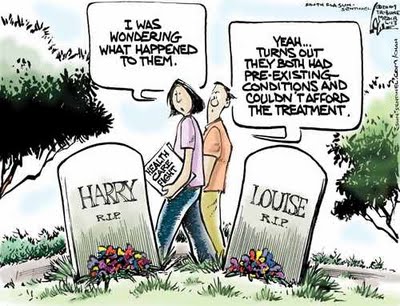
Whilst on the subject of doctors and what they signed up
for, we must also consider euthanasia from the angle of non maleficence. That
is to say, a doctor should do no harm to their patient. There are so many cases
in which it is hard to see whether a doctor is doing harm or not. For example,
secondary euthanasia – administering a drug with the intention of helping a
patient whilst also foreseeing a potential risk to their life is not considered
illegal. The current law on this is very unclear and has been subject to a lot
of criticism in recent years. Lord
Browne-Wilkinson asked, “how can it be lawful to allow a patient to die slowly,
though painlessly, over a period of weeks from lack of food but unlawful to
produce his immediate death by a lethal injection, thereby saving his family
from yet another ordeal to add to the tragedy that has already struck them”
admitted that he found it “difficult to find a moral answer to that question”. So is a doctor doing more harm by not
assisting the patient in committing suicide and keeping them alive against
their own will? In this case, I think the answer is yes but only for a small
minority of cases. Taking a life is fundamentally wrong and goes against one of
the oldest and most venerated moral injunctions “thou shalt not kill.”
Stretching all the way back to the origins of the medical professions,
Hippocrates scribed in the original Hippocratic oath that a doctor must swear
to do no harm to their patient. Currently, it is impossible to impose
medication on a patient against their own will, as they have the option to
reject it. Besides, can there really be anything more harmful to life than
terminating it altogether?
This leads to my next point about a patients autonomy. Every
doctor must respect their patient’s autonomy – their control over their own
body. It is indeed true that everyone has the right to die and has control over
their body. The suicide act was reformed in 1961, legalising it. However, also
under the suicide act, anyone who “aids, abets, counsels or procures” in the
suicide (or attempted suicide) will be liable for a prison sentence of up to 14
years. By the letter of the law, if a family member arranged for their
suffering relative to go to Switzerland and commit suicide in a dignitas
clinic, they could face a prison sentence on returning to the UK. This has
indeed happened – a family member was prosecuted for helping their sick
relative go to Switzerland but this fell at a very early stage with the crown
prosecution deciding that it would not be sensible to prosecute them. So if it
has been made legal to commit suicide, why can’t someone assist you in carrying
out a legal act if you are physically unable to do it yourself? My personal
take on this question is that the law was only changed in recognition of the
fact that people who attempt to commit suicide need mental help rather than a
lengthy prison sentence. There is also the slippery slope argument about
legalising assisted suicide, but since every law is open to abuse, I don’t feel
that the argument that legalising assisted suicide would lead to people
murdering each other under the guise of assisting suicide, as they had the
consent of the victim as one which is strong enough not to be countered by
strict regulations in any legalisation of euthanasia. The argument about autonomy
is one which is often brought up but never really carries any substantial
weight. A patient’s autonomy is an important principle but also one which must
be balanced with other ethical precepts, such as the doctor’s duty to avoid
harm in its wildest sense. There must be a playoff between acting in the
patient’s best interest and respecting their autonomy in every ethical issue in
medicine and in my opinion, respecting a terminally ill patient’s autonomy is
often outweighed by the doctors duty to act in their best interest, especially
when the patient may not be in a mentally fit state to dictate what they want.
 The final angle I shall explore on this is that of justice.
Justice is a loosely defined term in this context because we must consider
justice from society’s perspective as well as the patient, their family and the
doctor. The law has no place for murder, perhaps one of the largest
contributing factors to the stable society we enjoy today. From society’s point
of view, it may be unjust not to allow someone who wants to but cannot commit
suicide to be assisted in doing so. However, it is equally unjust to legalise
mercy killing and assisted suicide, as such a system, however well regulated,
would be open to such a wave of abuse that it would be impossible to coexist in
a land where killing can be justified on the basis that it was by mutual
consent. I agree that it is unjust not to allow people in certain extreme cases
to be assisted in committing suicide and this view is shared by very many
people. On 12 March 2012, there was a landmark ruling by Mr Justice Charles on
Tony Nicklinson’s case to have a full hearing on having his physician assist him
in suicide without facing prosecution. The case of Tony Nicklinson prompted enormous
sympathy. Before his stroke he led an active life, working in Dubai as an
engineer. For more than six years he has needed constant care - an active mind
locked inside a paralysed body. His family do not want to go to Switzerland and
don’t want him to die from starvation. This just shows how despite me having a
strong view on this argument, it is impossible to categorically state that
euthanasia is an evil concept in every regard. I believe that since he clearly
has the right mental capacity to decide on his life and is merely making
provisions for the future when he may not be in such a fit state, his case is a
legitimate one. However, I don’t believe that it stands much of a chance in the
hearing for reasons stated above and covered in my conclusion.
The final angle I shall explore on this is that of justice.
Justice is a loosely defined term in this context because we must consider
justice from society’s perspective as well as the patient, their family and the
doctor. The law has no place for murder, perhaps one of the largest
contributing factors to the stable society we enjoy today. From society’s point
of view, it may be unjust not to allow someone who wants to but cannot commit
suicide to be assisted in doing so. However, it is equally unjust to legalise
mercy killing and assisted suicide, as such a system, however well regulated,
would be open to such a wave of abuse that it would be impossible to coexist in
a land where killing can be justified on the basis that it was by mutual
consent. I agree that it is unjust not to allow people in certain extreme cases
to be assisted in committing suicide and this view is shared by very many
people. On 12 March 2012, there was a landmark ruling by Mr Justice Charles on
Tony Nicklinson’s case to have a full hearing on having his physician assist him
in suicide without facing prosecution. The case of Tony Nicklinson prompted enormous
sympathy. Before his stroke he led an active life, working in Dubai as an
engineer. For more than six years he has needed constant care - an active mind
locked inside a paralysed body. His family do not want to go to Switzerland and
don’t want him to die from starvation. This just shows how despite me having a
strong view on this argument, it is impossible to categorically state that
euthanasia is an evil concept in every regard. I believe that since he clearly
has the right mental capacity to decide on his life and is merely making
provisions for the future when he may not be in such a fit state, his case is a
legitimate one. However, I don’t believe that it stands much of a chance in the
hearing for reasons stated above and covered in my conclusion.
Therefore, to conclude, I do not believe that the pro-euthanasia
arguments are sufficient reason to weaken society's prohibition of intentional
killing. Such a prohibition is the cornerstone of law and of social
relationships. In response to the examples of unbearable pain, I point to the
unparalleled palliative care system which exists in the UK. The purpose of this
system is to relieve patients of their pain. However, the observation by Lord
Browne-Wilkinson is one which cannot be ignored. When phrased in the way it
was, it appeals to every emotive sense in our bodies. Although it is my
personal view that the status quo does not accommodate all cases of terminally
ill patients which is wrong, my answer to why euthanasia is considered illegal
in the UK and why the UK does not follow the few European countries which have
legalised euthanasia is simple. It would be impossible to regulate in today’s
society. As the BMA states, it protects each one of us impartially, embodying
the belief that we all are equal. We do not want that protection to be
diminished. We acknowledge that there are individual cases in which euthanasia
may be seen by some to be appropriate. But individual cases cannot reasonably
establish the foundations of a policy which would have such serious and
widespread repercussions. Despite the focus of every enquiry being on the
victim, dying is not only a personal or individual affair. The death of a
person affects the lives of others, often in ways and to an extent which cannot
be foreseen. The issue of euthanasia is one in which the interests of the
individual cannot be separated from the interests of society as a whole. It is
also my personal view that such a ruling; legalising mercy killing/assisted
suicide would compromise the relationship of absolute trust which every single
person can enjoy in the UK. The guidelines against euthanasia exist in our
country for the sole reason to safeguard the interests of society as a
whole.
References:
Introduction to medical ethics – Tony Hope
BBC Ethics – euthanasia
BMA policy on euthanasia
Subscribe to:
Comments (Atom)