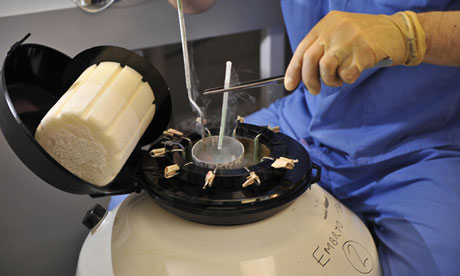
However, on the other hand, data from the Human Fertilisation and Embryology Authority shows that as of 2010, the success rate for frozen embryos was 23% compared to 33% for freshly implanted embryos.
It is unknown why such results are produced and they have been described as "counter-intuitive" by the lead researcher Dr. Abha Maheshwari. There are several theories which include one that states that the previously frozen embryos are given after the women's ovaries had settled down from the hormone treatment used to stimulate the ovaries so the hormone levels in the womb had returned to a more normal level and the embryos had been implanted into a more natural environment. Another idea is that only the high quality embryos are able to survive the whole process of being frozen although, with new developed methods, the survival rate tends to be more than 90%. The findings, although not acknowledged as experimentally sound by everyone, raise the question whether it would be wise to freeze all embryos before implanting them, a practice which is currently adopted in Japan. Their reviews say that previously frozen IVF embryos had 50% less of a chance of being born too small and 16% less risk of being preterm compared to fresh embryo babies The findings suggest that it would be safer for both the mother - suffering less bleeding - and the baby who would be less likely to have any complications. Although a long way off being confirmed and facing a lot of opposition, a debate in the near future once more experiments have been conducted is likely and there remains a possibility that the system currently run in IVF treatment might change in light of these findings.

No comments:
Post a Comment